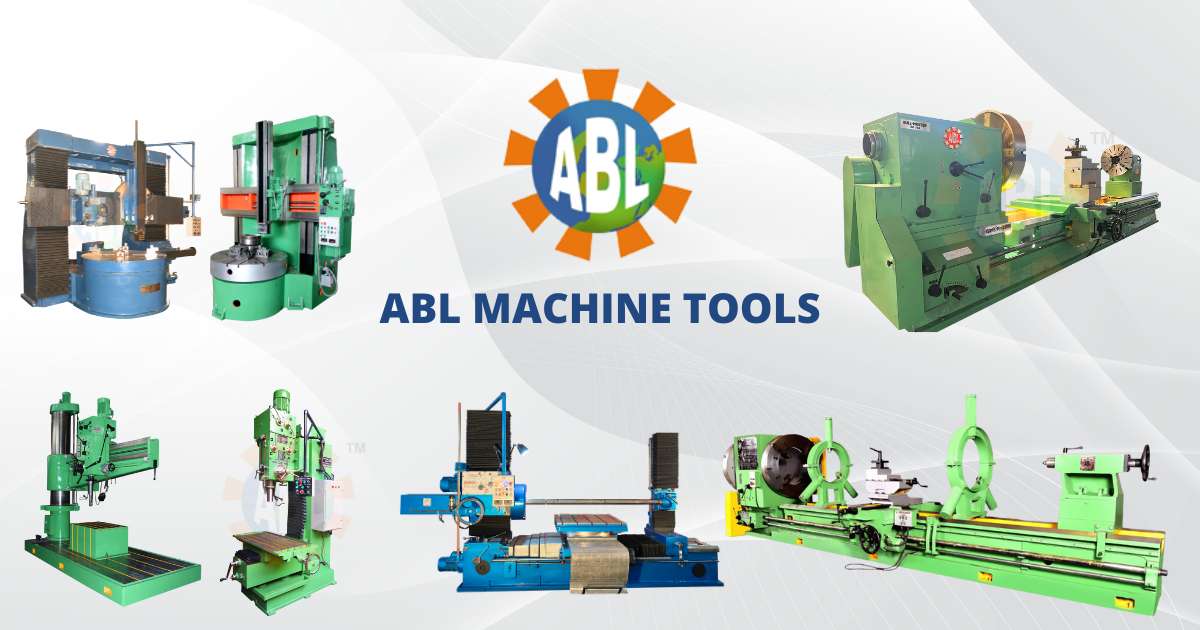
In heavy engineering, power generation, oil & gas, shipbuilding, or aerospace sectors, the demand for machining large and heavy components with precision is ever-increasing. CNC Heavy Duty Vertical Turning Lathe (VTL) machines are uniquely suited to this purpose, and India is emerging as a strong manufacturing base. Among the leading names, ABL Machine Tools stands out as a manufacturer of world-class CNC heavy-duty VTLs that cater not only to domestic clients but also to Saudi Arabia, UAE, Qatar, Kuwait, Bahrain, Oman, and Egypt.
What Makes CNC VTL Machines Special?
A vertical turning lathe positions the workpiece vertically and spins it while the tool remains relatively stationary or moves in axial directions. This design offers several advantages for large, heavy, or awkwardly shaped components:
- Gravity aids in better contact, stability, and chip flow, reducing deflection or vibration.
- It becomes easier to clamp and load large heavy parts since the spindle remains fixed relative to the base.
- It allows for machining large diameters efficiently — conventional horizontal lathes struggle at those scales.
By integrating CNC control systems, these machines deliver precise, repeatable, and automated machining cycles — ideal for high-value, low-tolerance parts.
ABL’s Offering and Strengths
On its product page for CNC Heavy Duty VTLs, ABL Machine Tools details several models in the “CVT Series.” Some of their configurations include table diameters from 1000 mm up to 3000 mm, turning heights from 600 mm to 1200 mm, and workpiece weight capacities ranging from 3,500 kg up to 15,000 kg.
Some salient features that distinguish their machines:
- Massive castings and heavy-duty bed structures to absorb cutting forces and reduce vibration.
- High-torque spindle drives and heavy transmissions, enabling aggressive stock removal even on tough materials.
- Standard offerings include automatic lubrication systems, variable-frequency drives (VFD) for the table, CNC controls (e.g. FANUC or Siemens), splash guards, coolant systems, and optional chip conveyors and attachments.
- Optional accessories let clients tailor their machines: hydraulic chucks, grinding attachments, extended travel, live spindle with C-axis, and more.
They also manufacture double-column vertical turning lathes for extra-heavy work (with even more rigidity, larger spans, and hydrostatic table arrangements) for extremely large workpieces.
Meeting Global Markets: Saudi Arabia, UAE & More
India’s strength in engineering, competitive labour, and improving quality standards make it a growing source for machine tools exported worldwide. ABL’s global strategy includes serving the Middle East & North Africa (MENA) region, with key markets such as Saudi Arabia, UAE, Qatar, Kuwait, Bahrain, Oman, and Egypt.
These markets often have heavy engineering, petrochemical, energy, infrastructure, and defense sectors — all of which require heavy-duty machining equipment. Indian manufacturers can offer good value, reliable support, and customization, which helps them compete against established global brands.
Why Choose an Indian Manufacturer Like ABL?
- Cost-effectiveness: Indian manufacturing offers lower cost structures without compromising on quality.
- Customization & flexibility: Because of closer client collaboration, Indian firms often more easily adapt designs, attachments, and special features.
- After-sales support: Having local representation or service agents in MENA countries helps maintain uptime and trust.
- Compliance with global standards: ABL ensures geometric accuracies, material quality, and precision tolerance to national & international benchmarks.
Applications & Industries
Typical use cases for CNC Heavy Duty VTLs include:
- Large flanges, pipe collars, and pressure vessel faces
- Rotors, turbine housings, generator casings
- Ship hull components, propeller hubs
- Forged rings, large gears, and wheel blanks
Because the workpiece stays stationary in many axes, multiple operations like turning, facing, drilling, milling, and even grinding (with attachments) can often be consolidated into fewer setups — saving time, reducing errors, and increasing productivity.